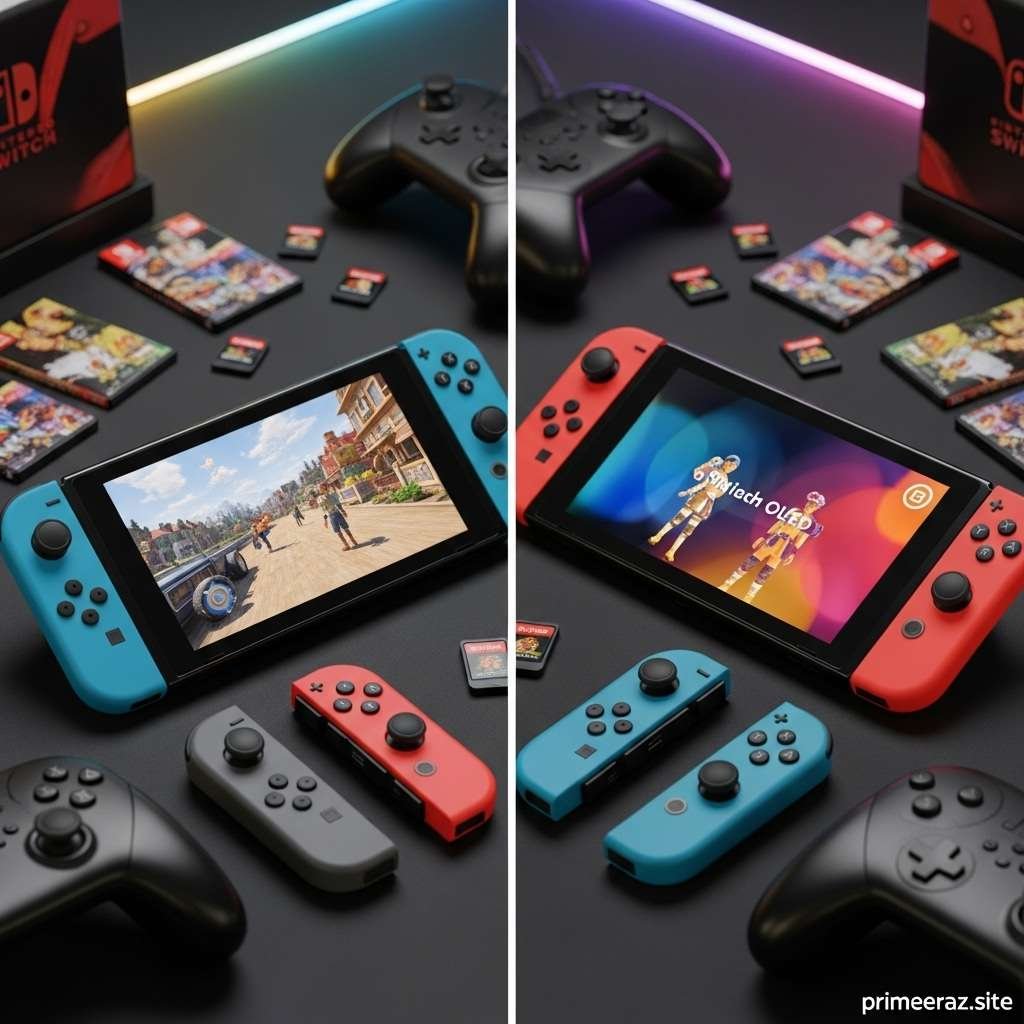
When shopping for a hybrid gaming console from Nintendo, the choice often comes down to the classic Nintendo Switch or the updated Switch OLED. Both let you enjoy Nintendo’s library of games, but they differ in display, storage, and a few comfort features. This comparison dives into what’s really different — and which model makes more sense for you in 2025.
Table of Contents
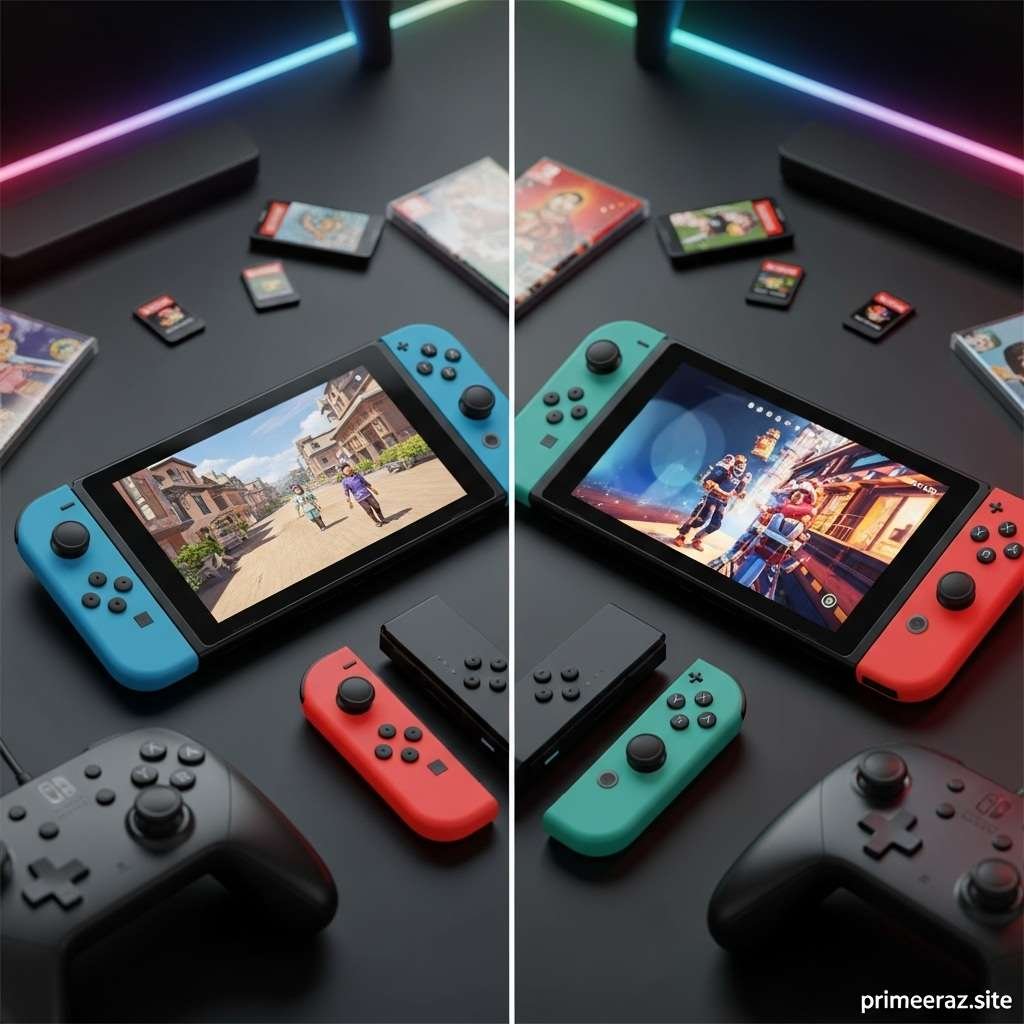
What’s the Same: Performance, Games, and Versatility
- Both consoles run on the same NVIDIA Custom Tegra processor and deliver identical gameplay performance and frame rates. All In The Diffrence+2iMore+2
- Both support handheld, docked (TV) and tabletop modes. Joy‑Cons, accessories, and almost all games are compatible with either model. Creative Bloq+2Digital Trends+2
- Battery life for both models is roughly similar — around 4.5 to 9 hours, depending on usage and game. Tom’s Guide+1
In other words: if you want the same games and performance, either console will do equally well.
Where Switch OLED Improves Over the Original Switch
Larger, Better Screen
- The original Switch uses a 6.2-inch LCD display. Creative Bloq+1
- The Switch OLED upgrades that to a 7-inch OLED panel, delivering deeper blacks, richer color, better contrast — ideal for handheld or tabletop gaming. TechRadar+2Popular Mechanics+2
- Even though resolution remains 720p in handheld mode, the OLED screen makes games look more vibrant and helps reduce eye strain. Popular Mechanics+1
More Internal Storage
- Original Switch comes with 32 GB built-in storage. Game Rant+1
- Switch OLED comes with 64 GB — double the storage. Useful when downloading multiple games or updates before adding a microSD card. VideoGamer+1
Improved Build Features
- Switch OLED features a much wider, sturdier kickstand — more stable for tabletop gaming or travel. Creative Bloq+1
- Dock improvements: the OLED’s dock includes a built‑in LAN (Ethernet) port for more stable wired internet when docked — better for online play. Game Rant+1
- Speakers on the OLED are improved — clearer and louder audio in handheld mode compared to the original. TechRadar+1
Where the Original Switch Still Holds Value
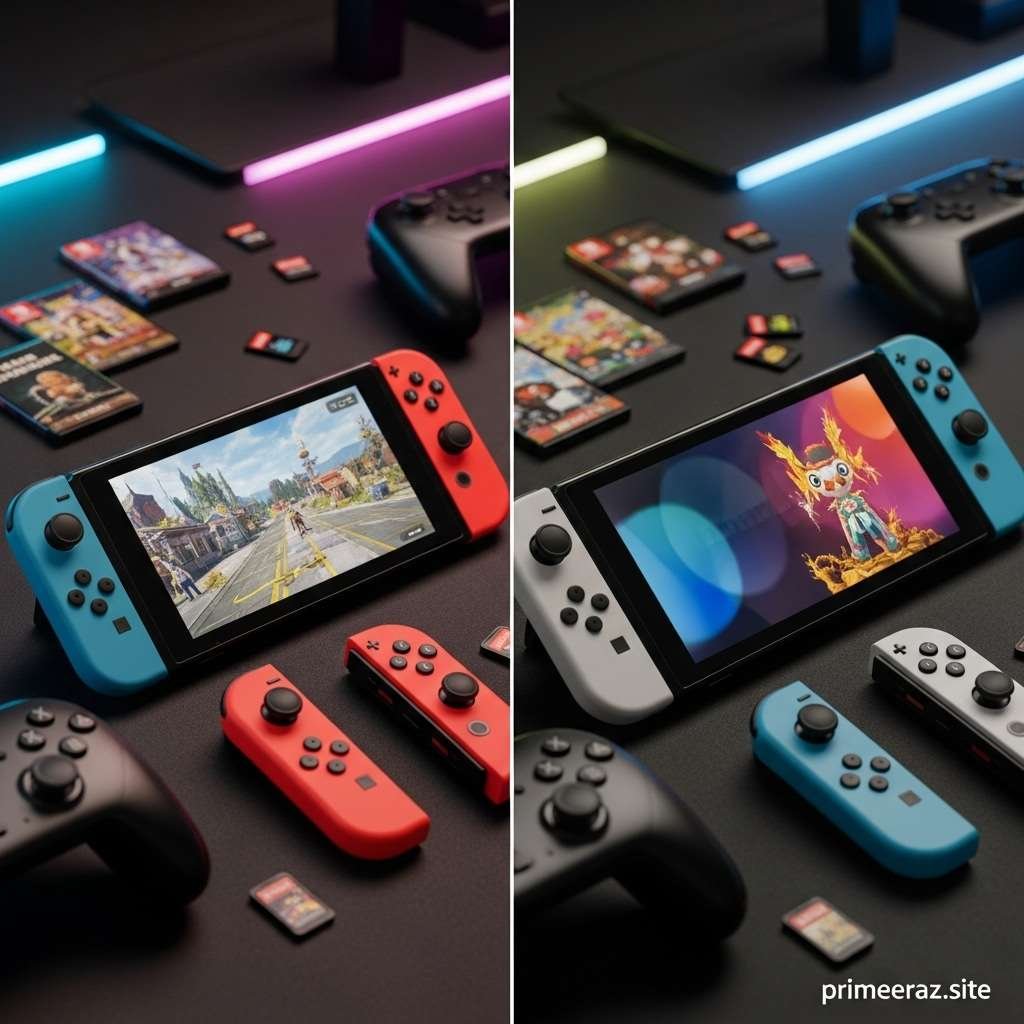
- Since both consoles have identical internal hardware, there is no performance advantage on the OLED. Gameplay, FPS, load times — all the same. All In The Diffrence+1
- The regular Switch is usually cheaper than the OLED, making it a budget‑friendly choice if you don’t need the upgraded display or extras. TechRadar+1
- For players who mainly play in docked mode (TV mode), the better screen and handheld improvements of the OLED don’t matter much — the standard Switch serves just as well.
Quick Comparison Table
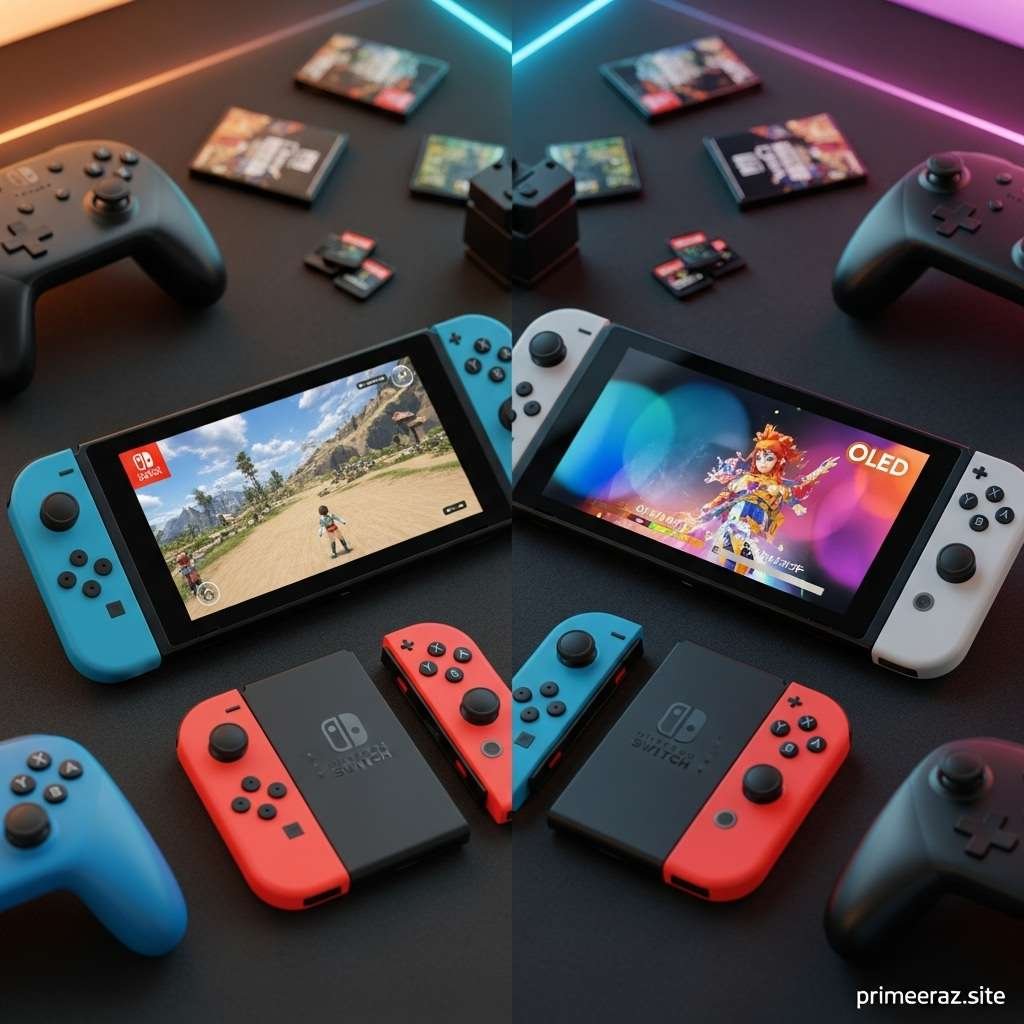
| Feature / Spec | Original Nintendo Switch | Nintendo Switch OLED |
|---|---|---|
| CPU / Performance | Same (NVIDIA Custom Tegra) | Same |
| Display | 6.2″ LCD | 7″ OLED, richer colors & deeper blacks |
| Internal Storage | 32 GB | 64 GB |
| Kickstand | Narrow, less stable | Wide, sturdy and adjustable |
| Dock | Basic dock, Wi‑Fi only | Improved dock with Ethernet port |
| Speakers | Standard | Enhanced audio |
| Best For | Budget buyers, dock-only users | Handheld gamers, those who value screen & quality |
| Relative Price | Lower | Slightly higher |
Who Should Buy Which Console?
Choose the Original Nintendo Switch if you
- Plan to mostly play on your TV (docked mode)
- Want a more affordable entry into Nintendo gaming
- Use external storage (microSD) from the start
- Don’t care about screen quality or portable/tabletop gaming
Choose the Switch OLED if you
- Value vibrant color, better contrast, and larger screen for handheld or tabletop
- Want better onboard storage without needing a microSD immediately
- Care about improved audio, more stable kickstand, and stronger dock connectivity
- Play often on the go (travel, handheld mode, portable sessions)
Final Thoughts
Both Nintendo Switch versions remain relevant and deliver excellent gaming experience. The main difference comes down to display quality and comfort features — enhanced screen, bigger storage, better dock and improved build on the OLED — while performance and game library remain identical.